
How do HIV-infected cells persist for years? Exploring clonal expansion of HIV-1-infected cells
Points
- HIV can persist for years in a small number of infected immune cells even under effective therapy.
- Some infected cells survive and expand as “clones,” helping maintain the long-lived viral reservoir.
- We use single-cell transcriptomics (and integration-site-linked approaches) to identify immune cell states associated with HIV activity and to understand infected-cell behavior at the gene-expression level.
Research Summary
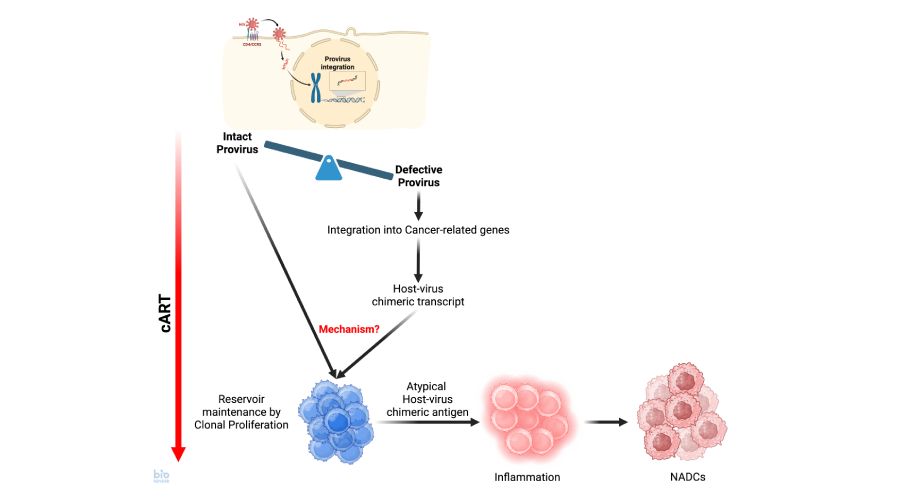
HIV integrates its genome into human DNA and can remain hidden within long-lived immune cells. Even when antiviral therapy suppresses detectable virus in the blood, a small population of infected cells can persist for years and sometimes expand into “clones,” making the viral reservoir difficult to eliminate.
In this project, we apply single-cell technologies to profile HIV-infected immune cells at high resolution. By measuring gene expression cell by cell, we aim to identify immune cell states associated with HIV activity and determine how infected cells differ from uninfected cells—particularly after viral integration.
By combining transcriptomic analyses with methods that pinpoint viral integration sites, we seek to clarify how integration and host gene regulation contribute to the stability and expansion of HIV-1-infected cell clones. These insights may help inform future strategies to better control or reduce the reservoir—an essential step toward durable HIV remission or cure.

